

FROM COMPETENCIES TO SUPPLY CHAINS: ENERGY SAFETY GROUP PARTICIPATION IN SMR TRAINING IN BUDAPEST
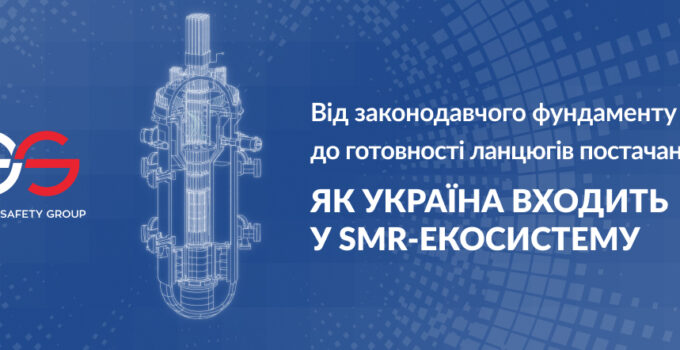
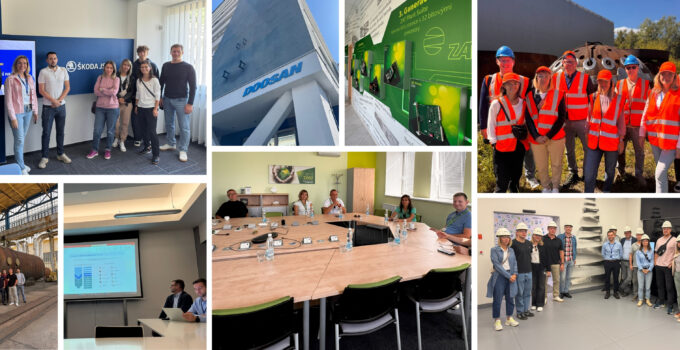
The development of Small Modular Reactors (SMRs) is increasingly moving from conceptual discussions to the practical preparation of supply chains. This transition was the focus of an international training programme held on 24–26 February in Budapest, Hungary, supported by the Government of the United Kingdom of Great Britain and Northern Ireland through the Foreign, Commonwealth & Development Office (FCDO), in partnership with Rolls-Royce SMR, the consulting company Pacellico, and the Center for Information, Analytical and Technical Support for Monitoring Nuclear Power Facilities of the National Academy of Sciences of Ukraine.
The initiative was not intended as a general discussion of prospects, but rather as a practical step to identify, assess, and prepare Ukrainian companies for participation in future international SMR construction supply chains.
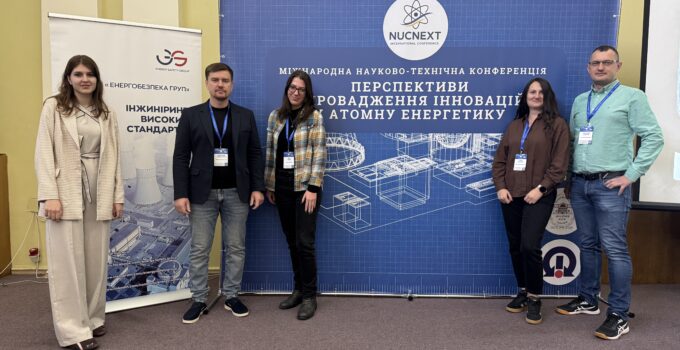
Energy Safety Group, including its Ukrainian office ES Group LLC, took part in the event, presenting the company’s engineering, manufacturing and scientific-analytical capabilities relevant to SMR projects. The participation reflected the logic of the SMR ecosystem itself from strategic positioning and international integration to technical justification and practical engineering implementation.
“For us, this is an important signal and at the same time confirmation that Energy Safety Group’s experience in engineering and technological solutions for operating NPP’s in Ukraine is also relevant for SMR projects. Being selected to participate among other Ukrainian enterprises demonstrates trust in our expertise and confirms our alignment with international expectations in terms of quality and professional maturity,” said Vadym Ivanov, CEO of Energy Safety Group.
The key segments of the company’s presentation during the training were delivered by Adam Bajer, Business Development Director of Energy Safety Group. He outlined the company’s approach to equipment supply for SMR projects, focusing on compliance with international codes and standards, full traceability of manufacturing processes, quality control, and integration into overall project quality management systems. At the same time, he presented the vision for the international integration of Ukrainian relevant experience into the SMR ecosystem as a structured, long-term process of building partnerships and trust.
“For SMR projects, it is essential that equipment suppliers comply with international codes and standards, ensure full traceability of manufacturing processes and integrate into the project’s quality management system. Our experience confirms the availability of manufacturing capabilities and engineering expertise which, subject to systematic alignment with international requirements, can be effectively integrated into global supply chains,” he noted.
At the same time, no SMR project can be implemented without comprehensive analytical and engineering substantiation. Deterministic and probabilistic safety analyses, regulatory documentation development, and confirmation of compliance with established criteria form the basis for licensing and subsequent implementation. Hanna Meleshko, Senior Engineer, R&D Group of Energy Safety Group, presented the company’s R&D capabilities and technical expertise, highlighting the importance of a systematic safety approach.
“SMR projects require thorough engineering substantiation and a systematic approach to safety. Our experience in performing deterministic and probabilistic safety analyses for operating nuclear power plants in Ukraine demonstrates that our specialists possess the competencies necessary to work in the SMR segment,” she stated.
On a practical level, integration into the SMR ecosystem also requires adapting engineering approaches to the specifics of modular solutions, the standards of leading technology providers, and new documentation and quality control requirements. These aspects were actively discussed by the engineering team during the training.
“For the engineering team, it is important to understand technology providers’ expectations at an early stage. This enables us to adapt technical solutions to international requirements and build readiness for working within SMR project frameworks. The presentation of our expertise by our colleagues during the event confirms the relevance of the competencies we have developed for future programmes,” noted Oleksandr Mazurok, CTO of Energy Safety Group.
SMR projects are being developed as long-term international programmes in which mature supply chains, validated engineering competencies, and compliance with international standards are decisive factors. Energy Safety Group is aligning its activities with this logic, systematically preparing for future SMR projects.
The initiative, implemented with the support of FCDO in partnership with Rolls-Royce SMR and Pacellico, provides a practical foundation for integrating Ukrainian companies into the European SMR ecosystem. For Ukraine’s nuclear sector, this represents a gradual transition from potential to structured and systematic participation in international programmes.