

10 YEARS OF ENERGY SAFETY GROUP: FROM ENGINEERING CALCULATIONS TO FULL-CYCLE INTERNATIONAL PROJECTS
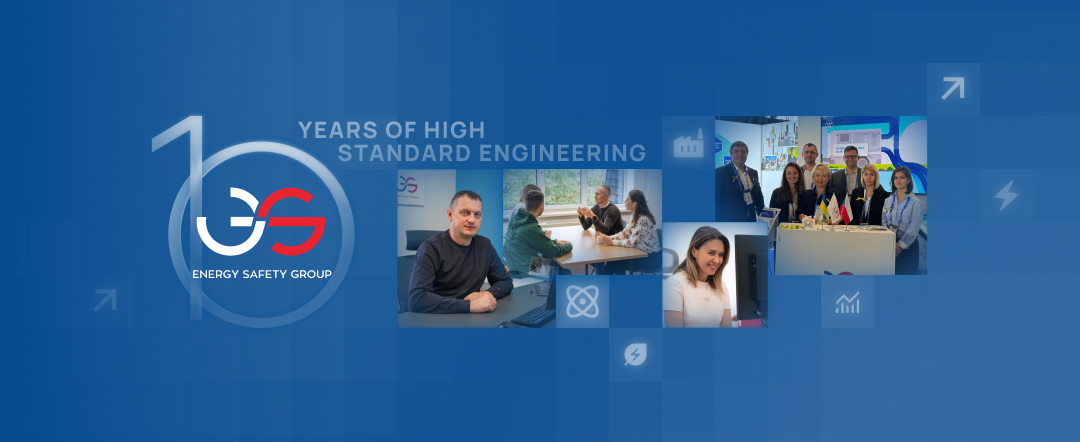
In 2016, Energy Safety Group began operations as a small Ukrainian engineering company with a team of six specialists. Ten years later, ES Group unites companies in Ukraine, the Czech Republic, and Hungary, has its own production and warehousing facilities, operates in the markets of six countries, and provides a full range of services for the nuclear and industrial power sectors – from safety assessments and design to manufacturing, supply, installation, and commissioning of equipment.
Over the past ten years, not only has the scope of Energy Safety Group activities changed, but so has the nature of the company’s project responsibilities. The team has moved from individual engineering calculations and design documentation to comprehensive projects, where it is responsible for the entire lifecycle of a technical solution – from feasibility studies to manufacturing, delivery, installation, and commissioning. Today, the group’s portfolio includes more than 20 major projects to enhance NPP safety, about 30 modernization and efficiency improvement projects – including diversification initiatives – and more than 50 analytical projects.
Engineering: where it all began
During its early years, Energy Safety Group focused on projects requiring a deep understanding of the physics of NPP processes and the regulatory requirements for safety-critical equipment. The impetus, of course, came from the safety reassessment following the Fukushima accident and the development of programs to enhance NPP safety.
The team performed thermohydraulic, structural, seismic, neutron physics, and radiation calculations, and prepared safety analysis reports as well as design, technical, and operational documentation.
This expertise formed the basis for the company’s participation in large-scale modernization programs for Ukrainian NPP. Completed projects include water level measurement systems in spent nuclear fuel storage pools as part of the post-accident monitoring system (PAMS), emergency water supply systems, passive hydrogen removal systems, and filtered pressure relief systems for the containment vessel. The company has also worked on projects involving compact storage of spent fuel, systems for containing core melt within the reactor vessel, diagnostic and control equipment, heat exchange equipment, and specialized solutions for VVER reactors.
In such projects, engineering determines whether the project can be implemented. Before manufacturing and delivering equipment, it is necessary to confirm its compatibility with the power unit’s systems, assess the impact on safety, prepare documentation, and obtain approval from the operator and the regulator. The experience gained has gradually expanded the role of Energy Safety Group: from a provider of individual calculations and design work to a company capable of managing the comprehensive implementation of technical solutions, manufacturing, and the supply chain.
From papers to equipment, installation, and commissioning
The next stage involved establishing a full project execution cycle. In addition to engineering expertise, the company expanded its capabilities to include procurement planning, supplier qualification, production control, international logistics, design and technical supervision, installation, and commissioning.
One of the first major EPC projects outside the nuclear power sector was the modernization of the hydrogen plant at the Burshtyn Thermal Power Plant (TPP). Energy Safety Group developed the project documentation, organized the supply of hydrogen and nitrogen generators, the dismantling of the previous installation, the installation of new equipment, its connection to existing process systems, commissioning, and staff training. This project demonstrated that the engineering and management approaches developed in the nuclear power industry can be effectively applied to other critical infrastructure facilities.
In 2023, the group established the production and warehousing facility of PROATOM LLC near the Khmelnitsky NPP. Having its own site has strengthened control over timelines, logistics, and quality, and created the conditions for localizing complex production operations and preparing equipment in the immediate vicinity of the nuclear facility. In 2025, PROATOM became the Group’s project hub, integrating design, production preparation, warehousing, and contract management. Today, the Energy Safety Group structure encompasses a group of companies: the Ukrainian firms ES Group LLC and PROATOM LLC, as well as the Czech firms ES Group Europe s.r.o. and ES Group Hungary Kft.
The development of proprietary products has been a natural extension of this model. The company is developing the FOSAR system to locate and retrieve foreign objects from hard-to-reach and flooded areas of NPP. The system, comprising underwater cameras, lighting, manipulators and positioning devices, is designed to carry out inspections and technical operations in environments where manual intervention is difficult or impossible. At the same time, Energy Safety Group utilises BIM/3D modelling and digital twins to verify spatial solutions, manage interfaces and prepare working documentation.
Projects that opened up the international market
Energy Safety Group entry into international markets marked a further expansion of the company’s engineering and project management capabilities. The experience gained while implementing complex projects in Ukraine enabled the company to expand its operations to other countries operating VVER reactors, where introducing new equipment and technologies requires adaptation to the specific configuration of the power unit, the national regulatory framework, licensing procedures, and the operator’s requirements. Gradually, the company’s international activities have expanded to include the Czech Republic, Bulgaria, Hungary, Slovakia and Armenia.
As Energy Safety Group own capabilities grew, it expanded the scope of its collaboration with international technology companies. Partnerships with Westinghouse, Framatome, ZAT, Škoda JS, ČEZ and other players in the European nuclear industry have been established across a range of areas — from safety analysis, modernisation and adaptation of equipment for VVER reactors to R&D and the development of new technological solutions.
For Energy Safety Group, this model has become a key part of its international expansion: the company combines its knowledge of a manufacturer’s specific technology and equipment with its own expertise in VVER reactors, national regulatory requirements and the practical integration of solutions into operating power units.
The longest-standing partnerships gradually extended beyond individual contracts. Collaboration with Westinghouse encompassed projects for the VVER-440 and VVER-1000, the joint development of the LTCCS-440 long-term containment cooling system, and Energy Safety Group attainment of qualified supplier status with Westinghouse. Cooperation with Framatome developed, in particular, within the framework of the European research project NPHyCo, where the companies worked on the technical aspects of integrating nuclear power generation with the production of low-carbon hydrogen. The Czech dimension has developed into a distinct level of cooperation — ranging from collaboration with ČEZ and Škoda JS to the joint implementation, with ZAT, of the RRCS modernisation project at the Kozloduy NPP.
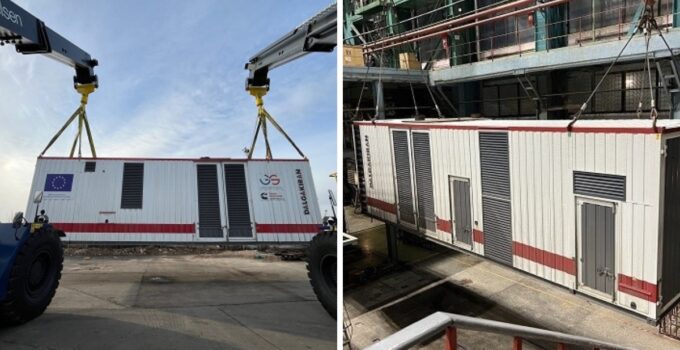
One of the most comprehensive international projects was the Armenian NPP project, carried out as part of the European Union’s programme to enhance the resilience of nuclear power units in the event of a power failure. Energy Safety Group, in collaboration with Dalgakiran Compressor Ukraine, was responsible for the design, manufacture, testing, supply and commissioning of a complex of mobile diesel generator sets to provide an alternative power supply in the event of a complete power failure at the power unit. The complex comprised six mobile diesel generators of varying capacities, integrated into containerised modules featuring fuel tanks, electrical cabinets and control systems for autonomous operation; the equipment was designed to meet seismic resistance and nuclear safety requirements. Following factory acceptance tests, delivery, and commissioning, the equipment’s operational capability was verified in November 2025 during a joint emergency response exercise involving the Armenian NPP and the Nuclear Safety Regulatory Commission of the Republic of Armenia. Mobile diesel generators were deployed to provide backup power to safety-critical systems and successfully performed the operations specified in the scenario. The results of the exercise confirmed the system’s operational capability under an emergency scenario and the quality of the engineering solutions implemented at all stages of its development – from design and manufacture to testing and integration into the NPP’s infrastructure.
Another form of international cooperation has taken shape in Bulgaria, where the Energy Safety Group, in collaboration with the Czech company ZAT a.s., is modernising the Reactor Rod Control Systems (RRCS) at power units 5 and 6 of the Kozloduy NPP. The project involves implementing the SandRA Z100 digital platform and replacing the control system’s hardware and software, adapted to the current configuration of the VVER-1000 power units. A key feature of the solution is its ability to work with various types of control rod actuators, including non-russian, new-generation LKP-M/4 actuators manufactured by Škoda JS. In this project, the Czech manufacturer’s technology is combined with engineering adaptations to meet the requirements of the existing power units, creating the technical conditions for the further diversification of VVER equipment.
Cooperation with Czech technology companies developed in parallel with the Energy Safety Group integration into the Czech industrial sector. ES Group Europe was an associate member of the Czech Power Industry Alliance (CPIA), which brought together leading companies in the energy machinery and engineering sectors. CPIA membership provided an opportunity to work in a shared professional environment alongside Czech manufacturers and engineering firms, while also contributing the Group’s expertise in NPP safety, VVER technology, adapting Western solutions to existing power units, and implementing international projects. Following the cessation of CPIA’s activities as a separate association in March 2026, its members joined the Czech Energy Association (Svaz energetiky ČR), continuing sectoral cooperation on a broader scale. For Energy Safety Group, participation in such a professional environment is one way it integrates its expertise into European engineering and manufacturing networks and contributes to the development of joint technological and project solutions.
Over the past ten years, Energy Safety Group’s international expansion has given rise to several interlinked areas of focus: a direct presence in the markets of countries operating VVER reactors; long-term partnerships with international technology companies; participation in European professional and industrial associations; and the ability to deliver comprehensive projects at overseas NPP. This model broadens the scope for integrating equipment, technologies and engineering solutions from various manufacturers, and enables Energy Safety Group to bring its own expertise – built on Ukrainian and Czech experience of working with VVER technologies – to international projects. At the same time, the company’s international activities have contributed to the diversification of technologies, equipment, engineering solutions and supply chains for VVER reactors, broadening operators’ access to alternative solutions and progressively reducing dependence on a single manufacturer and supplier.
Shaping the Next Decade
The first ten years have been a period during which Energy Safety Group has built up its engineering expertise, international partnerships and operational capabilities. The next stage in the company’s development centres on the technologies that will shape the future of nuclear energy.
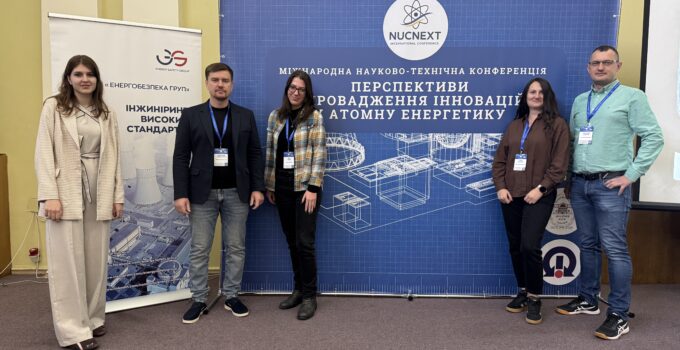
Small modular reactors (SMRs) have become a key area of development. Energy Safety Group has joined the European Industrial Alliance on SMRs, which brings together leading technology developers, NPP operators, engineering companies, equipment manufacturers, research institutions and regulators from across Europe. Within the Alliance, the company’s specialists have joined specialist working groups tasked with harmonising European approaches with the national regulatory frameworks of member countries, thereby laying the groundwork for the future deployment of small modular reactors. This work enables Energy Safety Group to participate in professional discussions at the very early stage of developing regulatory approaches to SMRs and to prepare its expertise for implementing future projects.
Another promising area has been the company’s participation in the international research project NPHyCo, dedicated to developing nuclear-hydrogen cogeneration technologies. The project brought together European partners to research the use of nuclear power generation to produce low-carbon hydrogen. Participation in the project has expanded the company’s scientific and technical expertise, provided an opportunity to contribute to international research, and enabled it to gain practical experience with technologies regarded as one of the most promising areas for the development of low-carbon energy.
The Energy Safety Group’s ten years of development have seen a steady expansion of its engineering remit — from calculations and design to in-house technologies, manufacturing and the management of complex international projects. The expertise developed during this time is shaping the next phase: participation in the technological transformation of the nuclear energy sector, the development of SMRs, new safety systems and European engineering and manufacturing supply chains.