

ENERGY SAFETY GROUP STRENGTHENS TECHNICAL EXPERTISE THROUGH A VISIT TO THE WESTINGHOUSE TRAINING CENTER AND PARTICIPATION IN THE SNETP FORUM IN MADRID
In late March 2026, representatives of the Energy Safety Group — Anna Meleshko, Senior Engineer of the R&D Group, and Yuriy Vorobyov, Senior Engineer of the Thermal-Hydraulic Analysis Group — made a technical visit to the Westinghouse training centre near Madrid, where they familiarised themselves with the training infrastructure and a full-scale simulator of AP1000 reactor technology. The visit marked an important milestone in the development of a technical partnership with a global nuclear industry leader and reaffirmed the company’s strategic focus on modern, next-generation technologies.
A key highlight of the visit was the opportunity to explore the AP1000’s fully digital control and management system. Unlike traditional block-style control panels, the simulator’s main console is built around widescreen monitors, keyboards, and joysticks, reflecting a modern approach to next-generation control systems. The team paid particular attention to the level of digitalisation and the architecture of safety systems, which provide multi-level redundancy, ensure fault tolerance, and maintain controllability of the reactor facility even under complex emergency conditions.
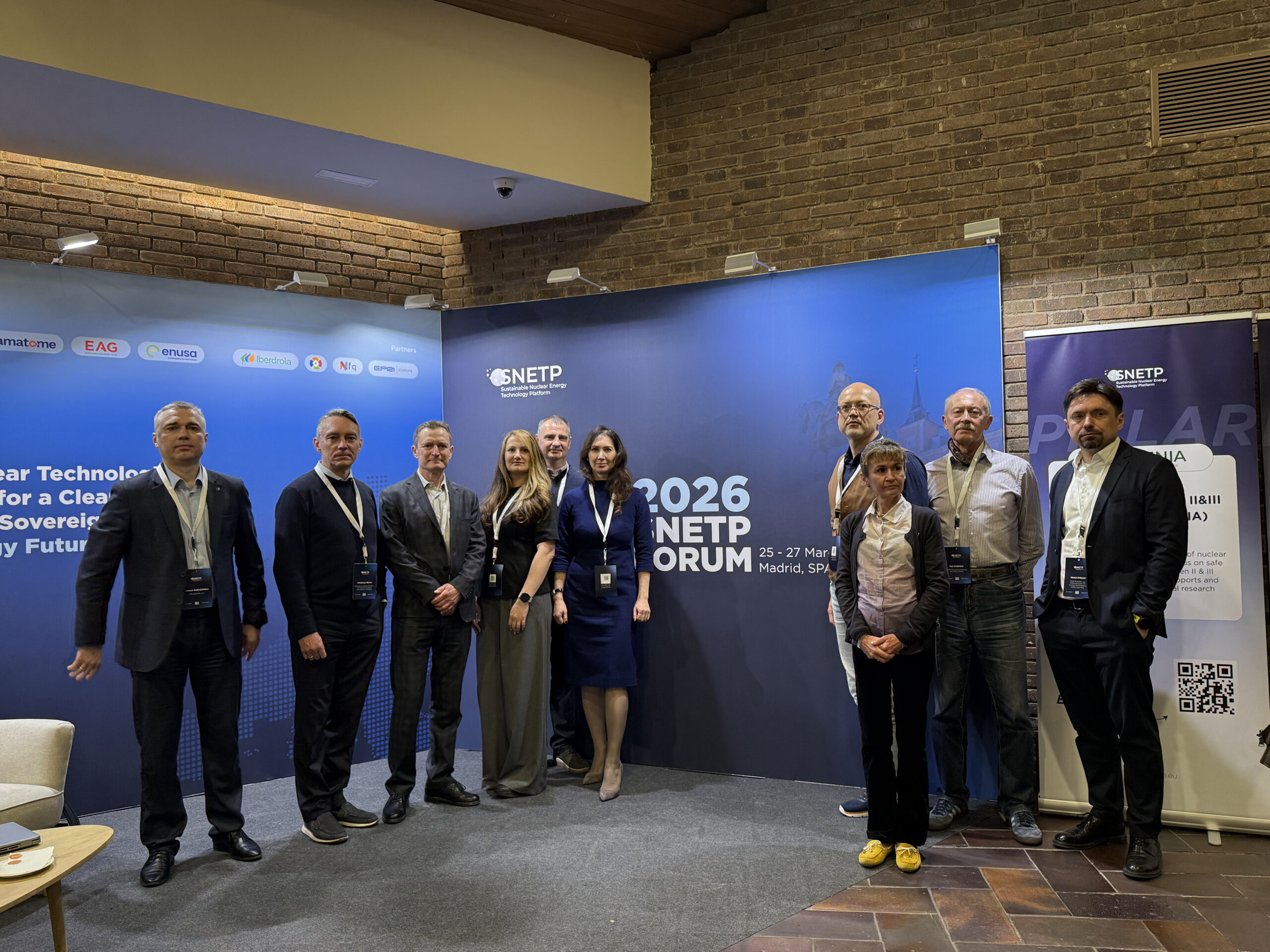
An additional international aspect of the trip was the participation of Energy Safety Group specialists in the SNETP (Sustainable Nuclear Energy Technology Platform) forum — one of the key European platforms for professional networking, knowledge exchange, and the development of international consortia in the nuclear industry. During the technical sessions, significant attention was devoted to current trends in the development of small modular reactors (SMRs), particularly issues related to regulatory requirements, supply chain certification, and differences in regulatory approaches among European countries.
“For us, participation in SNETP means, above all, access to a professional community where future approaches to modern technologies in the nuclear energy sector — particularly the development of MMR are shaped. Today, the key challenge remains the harmonisation of the regulatory framework and supply chain requirements, and it is precisely in such discussions that solutions are born which will subsequently determine the market’s readiness for new technologies”, comments Hanna Meleshko.
A separate focus of the forum was the discussion between Hanna Meleshko and Laurent Billet (EDF), a representative of the SMR Alliance and one of the coordinators of the Codes and Standards work package. Following the presentation of the results of the TWG2 technical group’s work, the parties discussed the possibility of involving the Energy Safety Group in the analysis of regulatory discrepancies in codes and standards for MMR across various European countries.
Further collaboration included participation in a workshop held on April 1 to explore the topic in greater depth. As of today, the company is already involved in this work, which opens up opportunities for practical participation in shaping approaches to harmonising the regulatory framework in the field of MMR.
During the forum, Hanna Meleshko also had the opportunity to meet with representatives of the RegLab project—an independent European initiative that brings together research institutions, regulators, and industrial companies to study innovations aimed at enhancing nuclear safety. Specifically, this involves applying artificial intelligence, robotics, and other cutting-edge technologies across technical, operational, and regulatory practices. Following the meeting, RegLab representatives invited the company to consider joining the next phase of the project.
Informal consultations were held with project coordinators Luis Herranz (MUSA project) and Fulvio Mascari (SASPAM-SA project) within the framework of NUGENIA regarding participation in the planned continuation of these activities. The planned projects concern the development of a methodology for uncertainty analysis in severe accident analysis and the analysis of extended accident conditions for MMR. The capabilities and experience of the Energy Safety Group, which has significant expertise in this field, can be mutually beneficial to the project participants.
Participation in such initiatives aligns with Energy Safety Group’s long-term strategy to develop expertise in advanced reactor technologies, next-generation safety systems, and integration into European professional and technological consortia.